

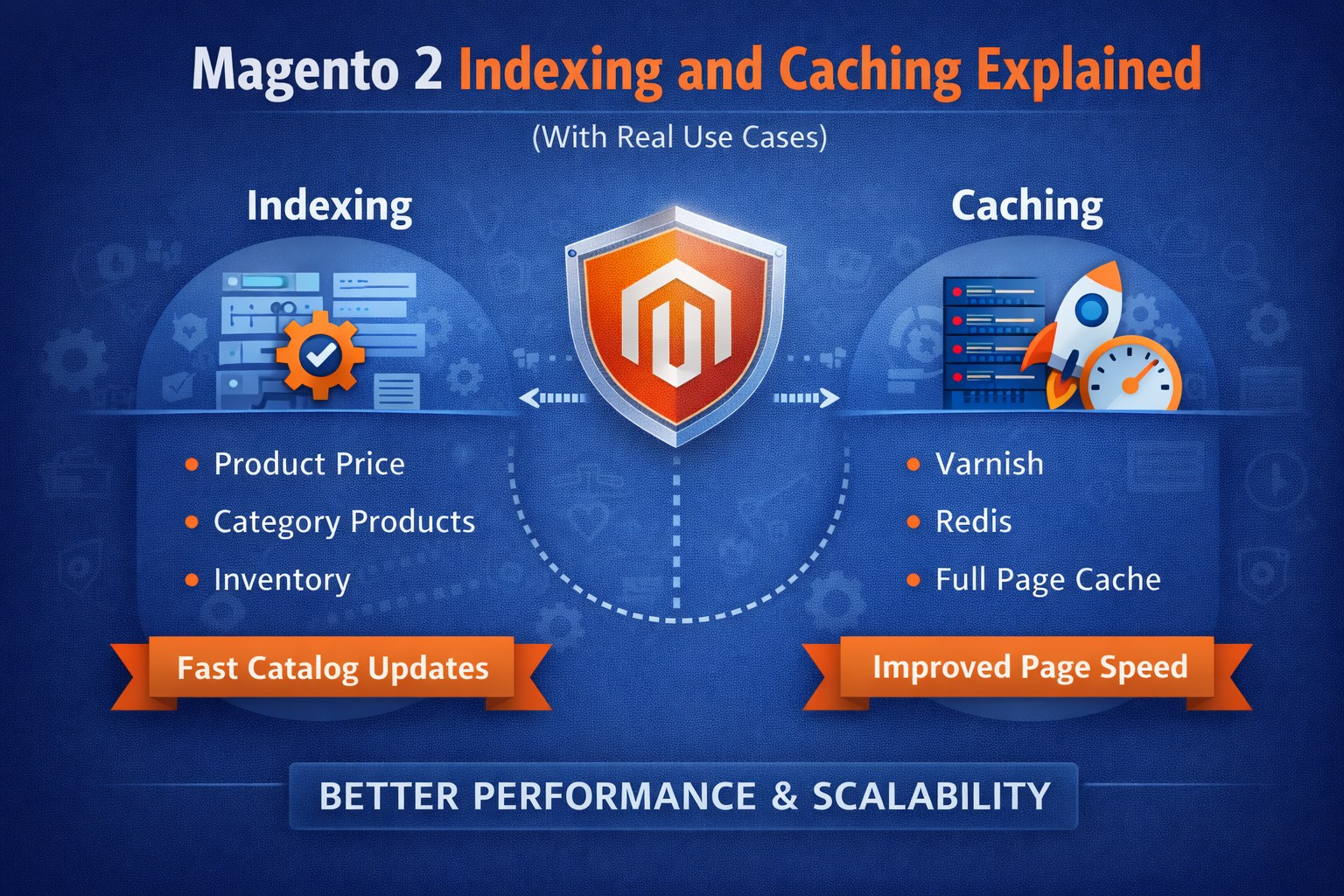

Optimizing Magento 2 indexing and caching is essential for delivering high-performing, scalable eCommerce stores. Poor indexing or caching misconfigurations can lead to slow catalog updates, delayed page loads, and frustrated customers. Understanding these mechanisms allows developers and store owners to improve speed, reduce server load, and enhance the overall shopping experience.
“Proper indexing and caching aren’t just performance tweaks—they’re the backbone of a fast and scalable Magento store.”
This article explains Magento indexing and caching concepts with practical use cases for enterprise stores.
What Is Magento 2 Indexing?
Magento 2 uses indexers to transform raw data from database tables into optimized formats for faster frontend access. Without indexing, product catalog updates, price changes, and category modifications can slow down the store significantly.
Key Indexers:
-
Product Price
-
Product Flat Data
-
Category Products
-
Stock
-
Catalog Search
Indexing Modes:
-
Update on Save: Immediate indexing after changes
-
Update by Schedule: Scheduled indexing via cron jobs (recommended for large stores)
Use Case:
A retailer with 50,000+ SKUs sets Update by Schedule for the Product Price indexer to avoid performance issues during bulk price updates.
What Is Magento 2 Caching?
Magento 2 caching stores frequently accessed data to reduce database queries and improve page load times.
Types of Magento Cache:
-
Configuration Cache: Stores system and module configurations
-
Page Cache (Full Page Cache): Stores rendered HTML pages for fast frontend delivery
-
Block Cache: Caches reusable frontend blocks like product listings
-
Collections Cache: Optimizes database query results for repeated use
Common Caching Technologies:
-
Varnish: Recommended full-page caching for production environments
-
Redis: Memory-based caching for session storage and backend cache
-
Built-in File Cache: For smaller stores or development environments
Use Case:
An eCommerce store experiences 40% slower page loads during peak traffic. Implementing Varnish for full-page caching and Redis for session management reduces server load and improves load times by 3-5x.
Real-World Benefits of Indexing and Caching
-
Faster Catalog Updates
-
Updates to prices, inventory, or product attributes propagate quickly
-
Reduces admin panel lag for large product catalogs
-
-
Improved Frontend Performance
-
Pages render faster with pre-processed index data
-
Cached HTML reduces database calls
-
-
Scalability During Peak Traffic
-
Full-page caching and Redis support thousands of concurrent users
-
Prevents server overload during promotions and flash sales
-
-
Enhanced SEO and User Experience
-
Fast-loading pages improve Google Core Web Vitals
-
Reduced bounce rates and higher customer satisfaction
-
Best Practices for Magento 2 Indexing and Caching
-
Schedule heavy indexers using cron jobs
-
Use Varnish for full-page caching in production
-
Separate Redis instances for sessions and cache for performance
-
Clear caches after deploying updates or new modules
-
Monitor indexing and cache status using Magento Admin or CLI commands
Command-Line Tips:
Conclusion
Mastering Magento 2 indexing and caching is crucial for delivering fast, scalable, and reliable eCommerce stores. By implementing proper indexer strategies and caching mechanisms like Varnish and Redis, developers can ensure smooth catalog updates, improved page speed, and optimized server performance.
“Efficient indexing and caching transform Magento stores from slow-loading catalogs into high-performance eCommerce engines.”
With real-world use cases, these strategies are indispensable for enterprise Magento environments and high-traffic online stores.