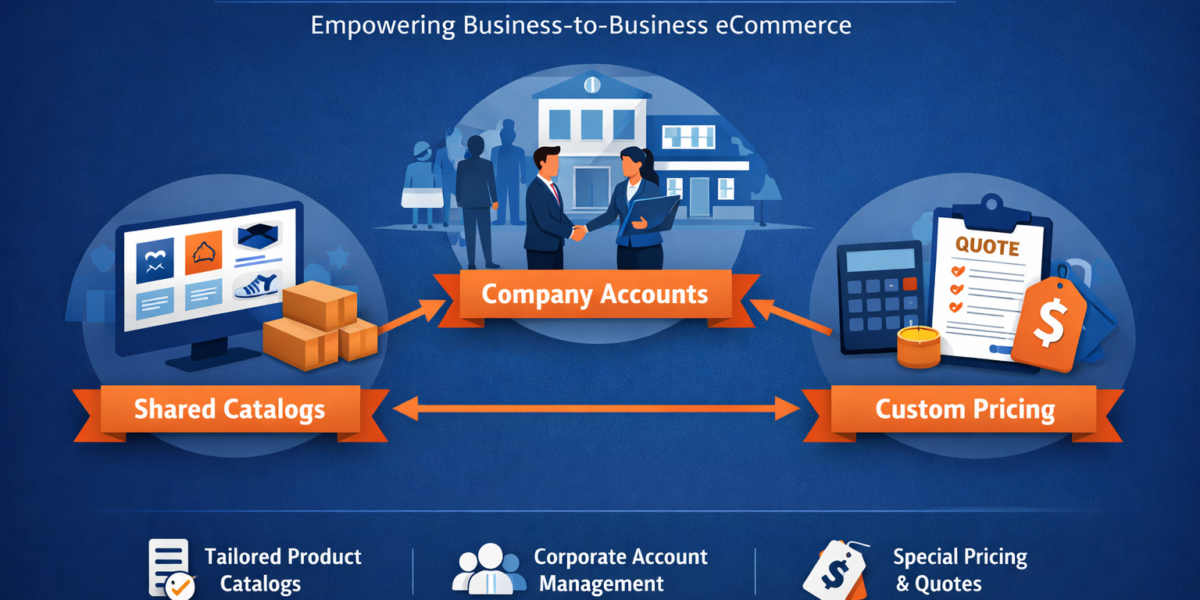

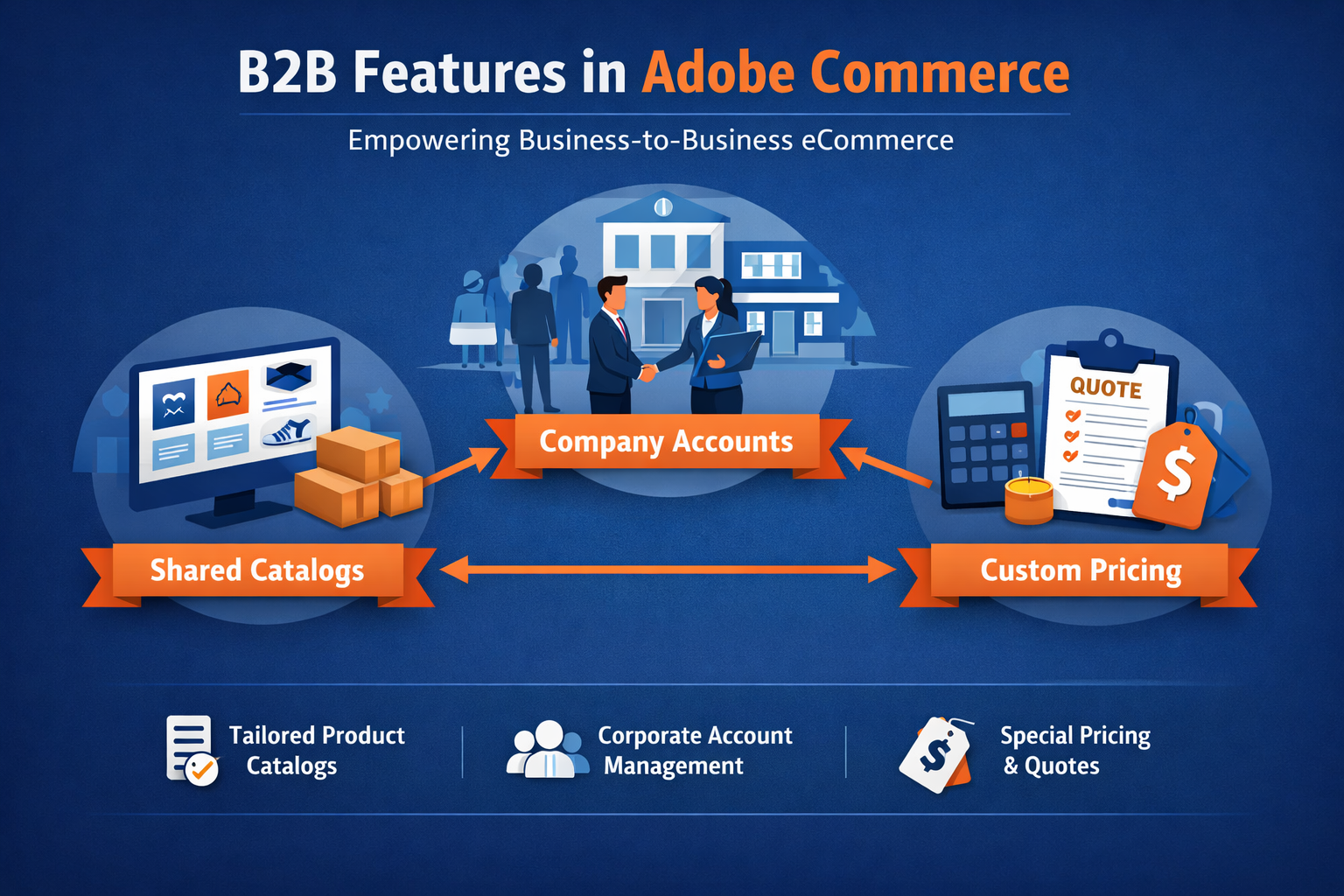

Adobe Commerce (Magento Commerce) offers powerful native B2B features that allow enterprises to manage complex business-to-business operations efficiently. From shared catalogs to company accounts and custom pricing, these tools streamline procurement, enhance customer experience, and boost operational efficiency.
“B2B eCommerce isn’t just about selling products—it’s about creating scalable, personalized experiences for business buyers.”
This guide explains how to implement essential Adobe Commerce B2B features to support large-scale business operations.
Why B2B Features Matter in Adobe Commerce
Unlike standard B2C stores, B2B stores deal with:
-
Multiple buyers per company account
-
Custom pricing for different customers
-
Quotation and approval workflows
-
Bulk orders and repeat purchases
Implementing these features natively in Adobe Commerce reduces reliance on third-party extensions and ensures a secure, upgrade-safe solution.
1. Shared Catalogs
Shared catalogs allow businesses to create different product catalogs for different customer groups or companies.
How to Implement:
-
Navigate to Catalog > Shared Catalogs in the admin panel
-
Create a new catalog and assign it to a specific company or customer group
-
Include products, categories, and visibility rules
-
Assign custom pricing for items within the shared catalog
Benefits:
-
Tailored product offerings for individual companies
-
Streamlined pricing management
-
Enhanced B2B customer experience
2. Company Accounts
Company accounts enable multiple users under a single organization, supporting roles and hierarchical permissions.
How to Implement:
-
Enable Company Accounts in Stores > Configuration > B2B Features
-
Create companies and assign users with specific roles (e.g., buyer, approver)
-
Configure approval workflows for order placement
Benefits:
-
Centralized management for corporate clients
-
Purchase approvals and workflow control
-
Better tracking of orders, spending, and user activity
3. Custom Pricing
Adobe Commerce allows per-company or per-customer pricing to support negotiated contracts and bulk discounts.
How to Implement:
-
Assign custom price lists in Shared Catalogs or Customer Groups
-
Set fixed or tiered pricing for specific products
-
Integrate pricing with quotes and purchase approval processes
Benefits:
-
Supports complex B2B pricing strategies
-
Enables volume discounts and contract pricing
-
Enhances business relationships through personalized offers
4. Additional B2B Features to Consider
-
Quote Management: Customers can request quotes for products, which can be approved or modified by your sales team
-
Requisition Lists: Allow companies to save frequently ordered items for faster reordering
-
Credit Limits and Payment Terms: Set limits and flexible payment options for B2B clients
-
Order Approval Workflows: Ensure compliance with internal procurement rules
These features make Magento B2B development more efficient and scalable.
Best Practices for Implementing B2B Features
-
Plan company structures, roles, and workflows in advance
-
Use shared catalogs to simplify product visibility and pricing management
-
Leverage custom pricing for key accounts to improve retention
-
Regularly test workflows and approval processes for smooth operations
By following these best practices, you can maximize the benefits of Adobe Commerce B2B features while maintaining system performance and security.
Conclusion
Adobe Commerce offers a robust B2B platform capable of supporting complex business operations. By implementing shared catalogs, company accounts, and custom pricing, enterprises can deliver tailored experiences, simplify procurement, and enhance customer satisfaction.
“Implementing B2B features in Adobe Commerce transforms complex business operations into a seamless digital experience.”
Effective Magento B2B development ensures your store is scalable, upgrade-safe, and ready to meet the demands of modern business buyers.